Blog / Car Insurance
Driving through Flash Floods in Singapore: Tips to Stay Safe on Roads During Heavy Rain

Singapore's tropical climate often brings intense rainfall, and with it, the rising threat of flash floods in Singapore—especially during monsoon surges. Roads can become waterlogged quickly, leaving many motorists stuck in flood conditions with their vehicles severely damaged or un-roadworthy.
So, how can you stay safe and protect your car during Singapore’s wet weather? Here are expert tips from Budget Direct Insurance.
Why You Should Avoid Flood Water
When encountering flooded roads, the best advice is simple: don’t drive through. Always seek an alternative route. Even shallow water can be deceptively powerful and damaging.
- Avoid standing water over 15 cm deep and flowing water deeper than 10 cm. That’s around ankle-deep—enough to damage your car's engine or exhaust pipe.
- Water entering the air intake can cause significant damage, including engine failure.
- Studies show many drivers underestimate water depth and risk driving through moving water, putting lives at risk.
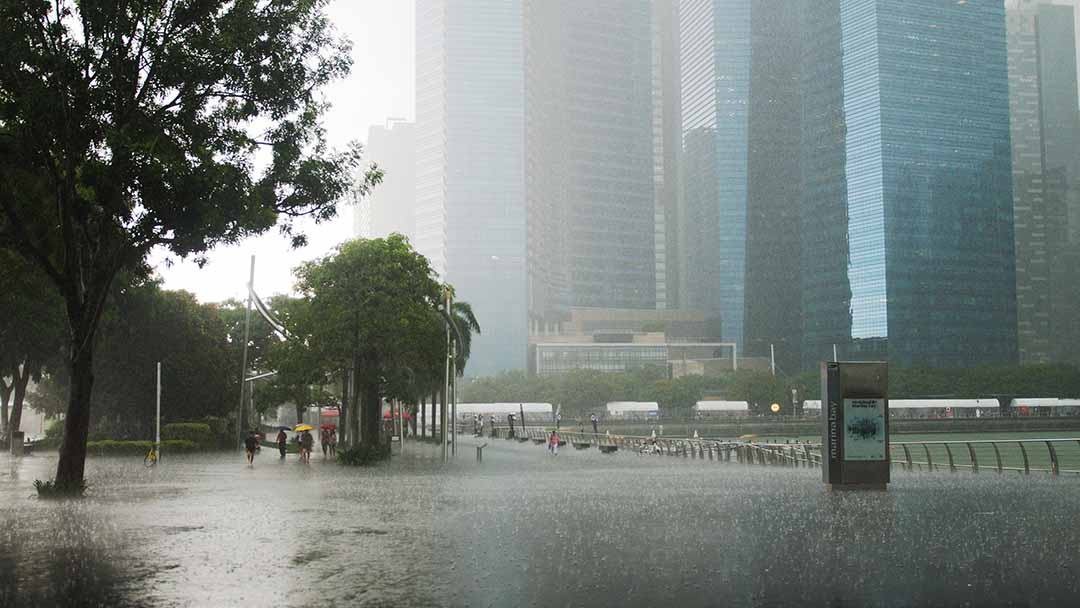
Assessing Floodwater Depth and Safety to Avoid Flood Water
Before you even think about driving through floodwater, it’s crucial to assess the situation carefully. Here are some practical tips to help you determine whether it’s safe to proceed:
- Water Depth: If the water is deeper than 10 cm, it’s best to avoid driving through it unless you’re in a 4x4 vehicle. Even shallow water can cause significant damage to your car’s engine or exhaust pipe.
- Look for Signs of Fast-Moving Water: Fast-moving water can be extremely dangerous and can easily sweep your car away. If you notice the water flowing quickly, it’s safer to find an alternative route.
- Identify Hidden Hazards: Floodwater can conceal various hazards such as raised drain covers, debris, or potholes. These can damage your car or cause you to lose control. Always be on the lookout for these hidden dangers.
- Check the Road Surface: Ensure that the road surface is not slippery or uneven. Slippery or uneven surfaces can cause your car to lose traction, increasing the risk of accidents.
- Consider Alternative Routes: If possible, take an alternative route to avoid driving through floodwater. It’s always better to be safe than sorry.
By carefully assessing the floodwater depth and safety, you can make informed decisions and reduce the risk of damage to your vehicle or personal injury.
If You Have No Alternative But to Drive Through Flood Water
If there's no alternative, here’s how to reduce risk:
- Enter water slowly at 1–2km/h, then gently accelerate to 3–4km/h to create a bow wave
- Stay in first gear and keep revving high to prevent water from entering the exhaust
- Drive in the middle of the road (crowned surface), where water is usually shallowest
- Avoid sudden braking or acceleration
- Once out, gently apply brakes to dry them
This applies to both manual and automatic cars. For electric cars and hybrids, check manufacturer advice for wet-weather use.
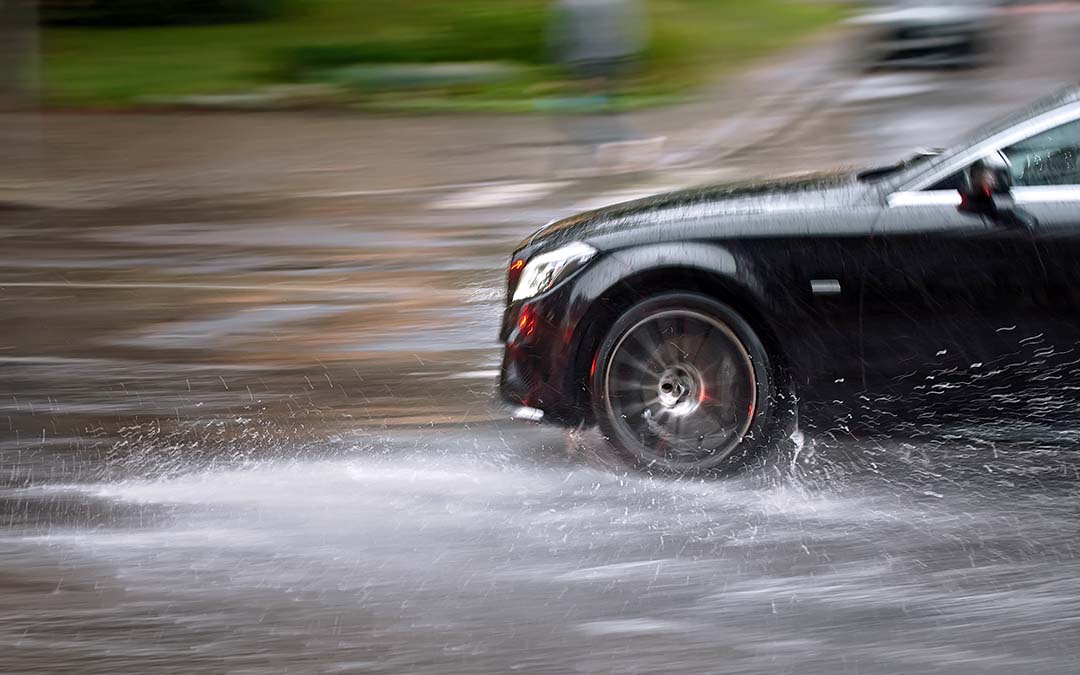
What If Your Car Aquaplanes?
Hitting deep water at speed can cause your tyres to lose traction, leading to aquaplaning. When this happens:
- Stay calm—don’t brake hard or jerk the steering wheel
- Ease off the accelerator gently
- Keep the steering wheel straight and look for an open, safe space to guide your vehicle
When a car hydroplanes, it loses traction—usually at the front tyres. If you brake suddenly, the front tyres may slow down while the rear ones lock up, increasing the risk of a spin. Likewise, sudden acceleration can cause the vehicle to lurch forward uncontrollably, which is especially dangerous if it's angled toward the roadside.
If your car has front-wheel drive (with or without ABS and traction control) or rear-wheel drive with those systems:
- Lightly maintain throttle and gently steer toward a safe area
If your vehicle has rear-wheel drive without ABS or traction control:
- Gradually ease off the accelerator and steer gently in the direction of safety
- Avoid sudden braking, which can cause loss of control and spin-outs—especially if the rear tyres lock. Aquaplaning is more likely during heavy rainfall or on roads where water levels quickly rise.
What To Do If Your Car Gets Stuck in Flood Water
- If your car gets stuck in a flooded road, switch off the engine immediately to prevent water intake
- Exit the vehicle only if safe—beware of oncoming traffic or fast flowing water
- Move to higher ground and call for assistance
- Do not try to restart the car—this could cause serious damage to your engine and electronics
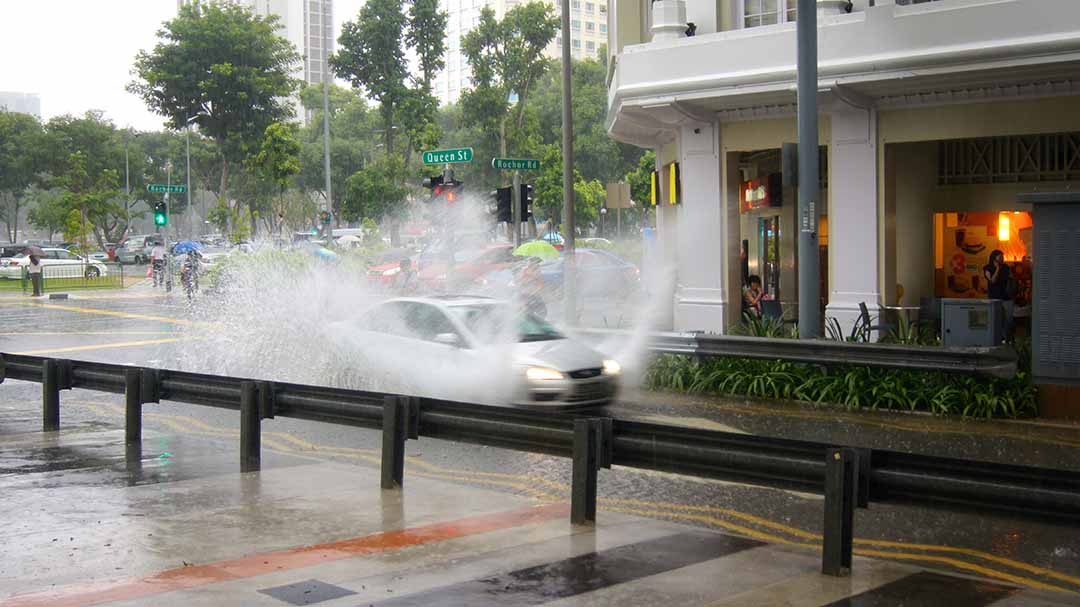
Flash Flood Hotspots in Singapore (PUB Official)
Be extra cautious around these flood-prone areas:
- Ang Mo Kio Ave 3 / Ave 8 junction
- Bedok North Ave 4 / Upper Changi Rd junction
- Bukit Timah Rd (Wilby Rd to Blackmore Dr)
- Craig Rd / Tanjong Pagar Rd junction
- Dunearn Rd (Yarwood Ave to Binjai Park; near Watten Estate Rd)
- Enterprise Rd (Jurong West)
- Jalan Boon Lay (near International Rd)
- Punggol Way slip-road to Tampines Expressway (TPE)
- Seletar North Link
- Upper Changi Rd East
- Upper Paya Lebar Rd
- Yishun Ave 2 / Ave 5 slip-road
- Cavenagh Rd / Kramat Lane
- Eng Neo Ave (near Vanda Link)
- Hougang Ave 8
- Jalan Nipah
- Jalan Boon Lay
- Jalan Gambir
- Kampong Ampat
For the latest updates, check the Singapore flood alert today issued via the PUB flash flood warning system or visit the NEA website – www.nea.gov.sg.
Protect Your Car with the Right Insurance
Flood damage can lead to expensive repairs or even a total loss. Not all policies cover water damage, so check your coverage.
Budget Direct Insurance offers comprehensive car insurance that includes protection against flash floods in Singapore, ensuring peace of mind when the rainfall gets heavy.