Blog / Car Insurance
ERP 2.0 & OBU Guide: Deadlines, Installation & Costs

Singapore’s Electronic Road Pricing (ERP) system is getting an overhaul. The government is making it mandatory for all Singapore-registered vehicles to have a new on-board unit (OBU) installed by 1 January 2027, when the new ERP system will be fully rolled out.
The new system, dubbed ERP 2.0, will use satellite technology to locate vehicles and determine the toll amounts to charge, rendering the current system, which uses gantries, obsolete. The implementation of ERP 2.0 involves a streamlined process for vehicle owners to transition to the new OBU, ensuring a smooth upgrade experience. The new OBU leverages satellite system and global navigation satellite system (GNSS) technology for precise vehicle tracking and road pricing, supporting seamless payments and improved connectivity within Singapore’s transportation infrastructure.
Introduction
Singapore is set to fully implement ERP 2.0, a next-generation Electronic Road Pricing system based on the Global Navigation Satellite System (GNSS). Unlike the traditional gantry-based system, ERP 2.0 relies on an advanced on-board unit (OBU) to achieve precise vehicle positioning and charging.
Key Requirements
- Mandatory Installation: All Singapore-registered vehicles are required to install the new OBU to facilitate the implementation of the ERP 2.0 system.
- Notification Process: The Land Transport Authority (LTA) will inform vehicle owners via notification letters, emails, or SMS.
- Proactive Action: Owners do not need to wait for an official notice; they may proactively visit authorized service centers to install the OBU early, ensuring their vehicle complies with the new ERP regulations ahead of time.
Official Source: You can verify these requirements and the transition details on the official LTA OneMotoring portal: https://onemotoring.lta.gov.sg/content/onemotoring/home/driving/ERP/erp-2-0.html
Final reminder to install OBU
OBU installation began in November 2023. About 93% of motorists have already installed their OBU.
The Land Transport Authority (LTA) began issuing final reminders to vehicle owners who have not yet installed their OBUs on 15 February 2026. Recipients are encouraged to make an installation appointment and select from available installation slots to ensure timely compliance.
Who must install an OBU in their vehicle?
Barring certain exceptions, all motorists in Singapore, including cars, motorcycles and heavy vehicles, must have an OBU installed.
About 5% of vehicles are exempted, including certain types of vehicles used for construction purposes such as tractors, and some types used at airports and ports.
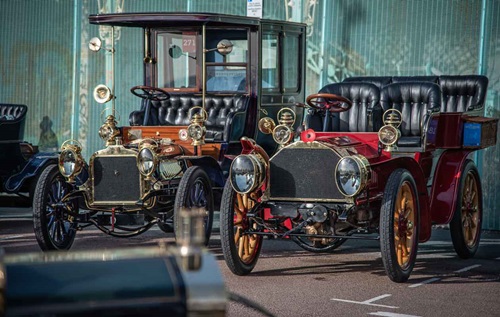
Certain classic or vintage vehicles are also exempt, but will have to pay a flat-rate ERP of $3 for motorcycles and $10 for other vehicles. Owners of such vehicles can opt to have an OBU installed if it is feasible for their vehicle model.
How much does OBU cost?
Are you part of the 7% who have not yet installed their OBU? It’s not too late to get it done for free. The installation is part of the replacement process, where the old IU is being replaced with the new OBU to support the ERP 2.0 system.
After receiving the final reminder, motorists have three months to have an OBU installed for free, after which they will have to pay an installation cost of $35 for motorcycles or $70 for other vehicle types.
Where to get OBU installed?
You can get the OBU installed in your vehicle at an authorised service centre or at one of the many service centres across Singapore.
These service centres offer multiple installation locations for OBU installation, ensuring convenience and accessibility for all vehicle owners.
For OBU installation, it is important to choose an authorised location to ensure compliance with regulations and receive professional service.
Can you install OBU by yourself?
No matter how much of a mechanic you might be, do not attempt to install an OBU on your own. Service advisors are available at authorised centres to guide vehicle owners through the installation process and answer any questions. Any OBU services, including installation, modification, repositioning, repairs and advertising, must be performed by authorised technicians. Only authorised technicians should handle the processing unit to ensure proper functioning and compliance.
Any attempt to install without authorisation or tamper with an OBU is an offence and punishable with a fine of up to $20,000, up to 12 months in prison or both.
Must foreign-registered vehicles install OBU?
Except for Malaysian taxis, there is no requirement for foreign-registered vehicles to have OBUs installed. However, such vehicles entering Singapore will need to pay a flat-rate ERP fee of $3 for motorcycles and $10 for other vehicles for every ERP-operational day that they are on Singapore’s roads.
From 1 April 2026 to 31 December 2026, foreign-registered vehicles also have the option of having an OBU installed at authorised workshops at a price of $158.70, excluding the cost of installation charged by the workshop. These units are available for foreign-registered vehicles who wish to install the OBU for seamless travel in Singapore.
What happens if you don’t install OBU by the deadline?
Right now, if you don’t have an IU or OBU in your car when driving through operating gantries, there is a penalty of $70 for each ERP gantry you drive through.
We do not yet know the penalties that will apply from the 1 January 2027 deadline.
So long as your car is still road-legal, your car insurance remains valid, even if you miss the deadline for installation of the OBU. However, be warned that any LTA fines received for non-compliance will not be covered.
OBU Components
The new OBU consists of several key components that ensure the efficient operation of the ERP 2.0 system.
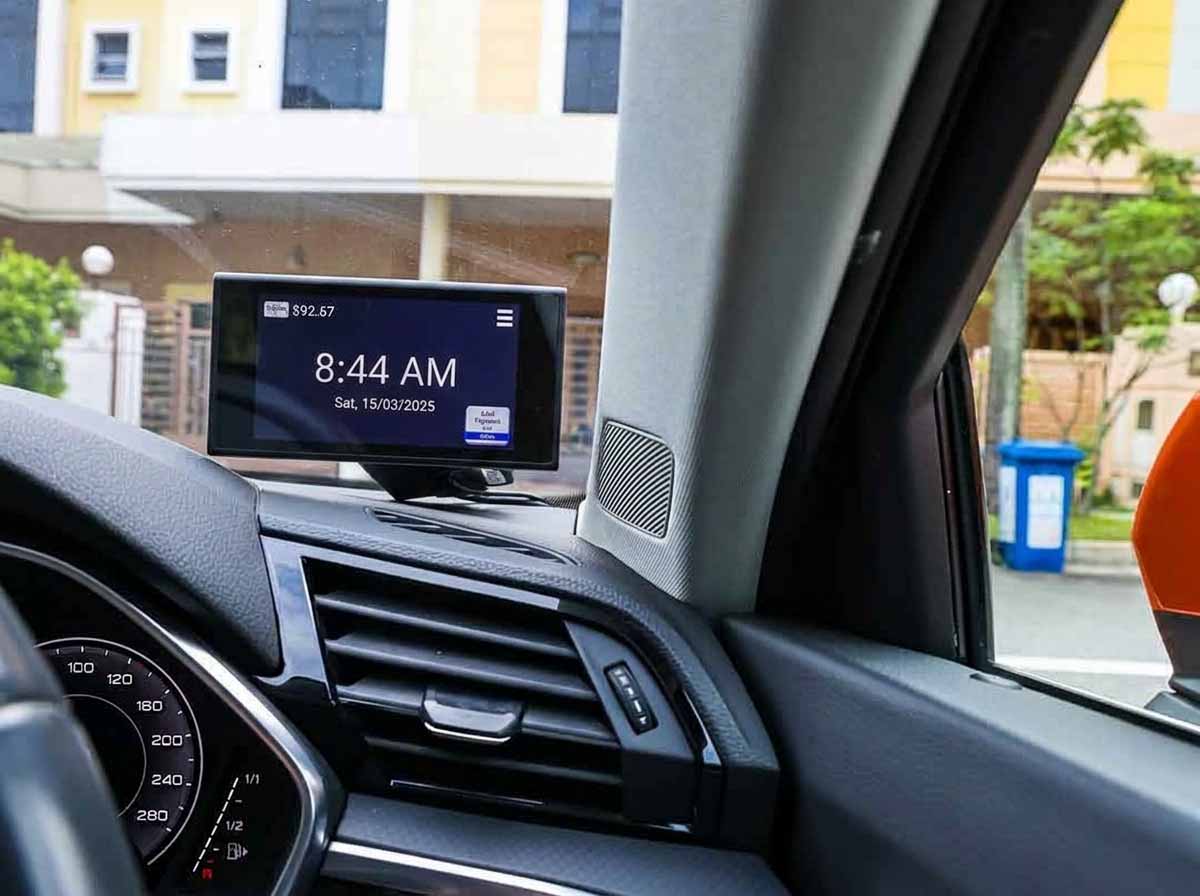
The Three Core Components
- Processing Unit: The "brain" of the entire unit. It is responsible for handling all transactions related to ERP and parking payments.
- Antenna Unit: This component communicates with the Global Navigation Satellite System (GNSS) to enable precise vehicle positioning and real-time toll charging.
- Touchscreen Display: Provides drivers with an intuitive interface. It displays real-time ERP charges, parking information, and card balances, allowing owners to monitor their account status at any time.
You can find the official, up-to-date information regarding the OBU components (Processing Unit, Antenna, and Touchscreen Display) on the main LTA OneMotoring ERP 2.0 portal here:
Official Source: https://onemotoring.lta.gov.sg/content/onemotoring/home/driving/ERP/erp-2-0.html
How is the OBU different from the IU?
a) ERP 2.0 vs ERP
The current ERP system, which has been operating since 1998, relies on gantries that communicate with a short-range wireless In-Vehicle Unit (IU) installed in each vehicle.
Motorists insert a NETS CashCard into their IU, and when they pass through a gantry during operating hours, ERP charges are deducted. Failure to do so will result in the driver being caught on camera and fined.
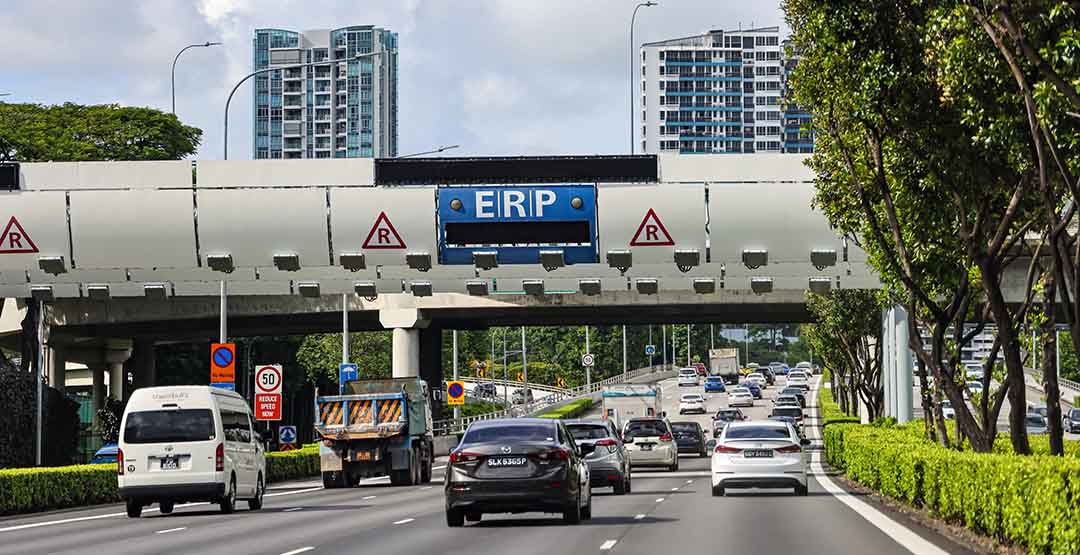
The new ERP 2.0 system will replace the IU with an OBU. Using GPS technology, the OBU will communicate the exact location of your vehicle so the appropriate ERP charges can be applied. Like the IU, the OBU can also be used to pay for parking.
While no information has been released about revisions to ERP charges under ERP 2.0, it is likely that the new system will enable the government to install new toll charging points and adjust ERP charges according to traffic congestion with a higher level of granularity.
The government has also mentioned that they will not be introducing distance-based charging in the immediate term, but has not ruled out the possibility that it may be implemented in the future.
b) OBU has a touchscreen
One of the OBU’s biggest differences from the IU is the touchscreen display, which will display ERP-related information, such as ERP charges, updates on road and traffic conditions, locations of certain types of infrastructure such as school zones, speed cameras and bus lanes, and of course, your card balance. Conversely, the IU only displays your card balance.
In addition to the usual payment methods, motorists can use certain stored value cards (e.g. NETS FlashPay Card) or the NETS or EZ-Link Motoring Card for payments, especially in private car parks that do not support the electronic parking system (EPS). LTA also provides a free NETS Motoring Card for first-time OBU installations, making it easier for drivers to adapt to the new system.
Some service centres may offer a complimentary car wash as a perk when you bring your vehicle in for OBU installation, adding extra convenience and value for customers.
The touchscreen is optional. If you decide not to have the touchscreen installed, you can access the same information that touchscreen users receive via a mobile application.
c) Decriminalisation of missed ERP payments
While the ERP 2.0 system is not necessarily something for motorists to get excited about, one piece of good news is that missed ERP payments will be decriminalised under the ERP 2.0 system. Under the current system, missed ERP payments, if left unsettled, are considered a traffic offence and can be prosecuted in court.
Under the ERP 2.0 system, you will have five days to pay your missed ERP payments and a $10 administrative charge after receiving an SMS notification from LTA. Until you do so, you will not be able to use certain LTA services, including renewing your road tax and transferring ownership of your vehicle.
While missed ERP payments are the responsibility of drivers under the old ERP system, under ERP 2.0, vehicle owners, rather than drivers, will be responsible for settling outstanding ERP charges.
Technical Support
To ensure the smooth installation of the OBU, the Land Transport Authority (LTA) has authorized numerous service centres to provide professional installation services for vehicle owners.
Professional Installation Process
- Qualified Technicians: These service centres are staffed by technicians who have undergone rigorous training by the LTA, enabling them to provide high-quality installation solutions for various vehicle models.
- Flexible Appointment Booking: Vehicle owners can express their interest in OBU installation and schedule a suitable time via telephone or online platforms.
- Installation Duration: The entire process typically takes 2 to 4 hours. It is recommended that owners consult with a service advisor before their appointment to determine the optimal placement of the OBU components within their vehicle.
you can refer to the official resources from the Land Transport Authority (LTA) and its digital platform, OneMotoring.
Official Sources & Links
- LTA's OneMotoring - ERP 2.0 Overview This is the primary portal for all details regarding
the transition, including technical specifications of the OBU and the installation timeline.
- Link: OneMotoring - ERP 2.0
- OBU Installation Booking & Workshop Locator LTA provides a dedicated tool to find
authorized service centers based on your vehicle make and to check your installation eligibility.
- Link: Book OBU Installation
- LTA Newsroom - Official Press Release Detailed announcements regarding the phased rollout, mandatory requirements, and the 5-year warranty on the OBU.
FAQ
What is the deadline for installing OBU in Singapore?
Motorists must have the OBU installed by 1 January 2027.
How much does it cost to install OBU in Singapore?
Installation is free for motorists who install the OBU within three months of the 15 February 2026 final reminder. After that, the cost will be $35 for motorcycles or $70 for other vehicle types.
Must foreign vehicles have OBU in Singapore?
Except for Malaysian taxis, there is no requirement for foreign-registered vehicles to install an OBU, but they must pay a flat-rate ERP charge for each ERP-operational day they use Singapore’s roads.
Sources & References
- S’pore to fully switch to new ERP system from Jan 1, 2027; Bill to make on-board unit compulsory, The Straits Times https://www.straitstimes.com/singapore/politics/spore-to-fully-switch-to-new-erp-system-on-jan-1-2027-new-bill-to-make-on-board-unit-compulsory
- Amendments to the Road Traffic Act to Facilitate ERP2 Transition and Enhance Penalties for Vehicle Safety, Land Transport Authority https://www.lta.gov.sg/content/ltagov/en/newsroom/2026/2/news-releases/amendments-rta-facilitate-erp2-transition-enhance-penalties.html
- Road Traffic (Electronic Road Pricing System) Rules 2015 https://sso.agc.gov.sg/SL/S226-2015
Disclaimer: The information provided in this article is for educational and informational purposes only and does not constitute professional legal advice. Readers are advised to consult with a qualified legal professional for matters relating to specific legal circumstances.